
From Film to Pixels: What 40+ Years of Photography Have Actually Taught Me
- Alan Young

- Dec 16, 2025
- 4 min read
Updated: Dec 29, 2025

Photography has changed beyond recognition since I first picked up a camera. Formats have shifted, workflows have accelerated, and the tools we use today would have felt almost unimaginable when I began. And yet, after more than four decades behind the lens, what surprises me most is not how much has changed, but how much has stayed exactly the same.
This is not a nostalgic look back for its own sake. It is a practical reflection on what still matters in photography after experiencing film, early digital, modern mirrorless systems, and now AI-assisted workflows. It is also an attempt to separate enduring photographic principles from temporary technological noise.
Learning the Craft Slowly
I started with film cameras at a time when every frame had a cost. You did not fire bursts. You did not “fix it later”. Exposure, focus, and composition were decisions made in advance, not corrected after the fact.
Developing black and white film in a darkroom taught patience and discipline. Mistakes were expensive in both time and materials, and feedback was delayed. That delay mattered. It forced reflection. You remembered exactly what you did when you pressed the shutter because you might not see the result for days.
That process trained the eye and the mind together. You learned to read light, anticipate movement, and visualise the final image before it existed. Those habits never leave you, no matter how advanced the equipment becomes.
What Film Got Right (and What It Didn’t)
Film imposed limitations, but those limitations created clarity. You committed to a film stock. You accepted its characteristics. Grain, contrast, and latitude were part of the aesthetic decision, not adjustable sliders.
However, film was not romantic in practice. Missed focus, exposure errors, and mechanical failures were unforgiving. Colour accuracy was inconsistent. Archiving was fragile. Reproducing work accurately was difficult.
The lesson was not that film was better. The lesson was that decisions mattered. The medium demanded intent, and that intent translated into stronger images.
The Early Digital Years
Early digital photography promised freedom, but delivered frustration. Resolution was limited, dynamic range was poor, and colour science was often unreliable. Yet digital changed everything by removing fear.
Suddenly, experimentation was encouraged. You could test ideas, refine techniques, and learn faster than ever before. That acceleration of learning was transformative.
What digital initially lacked in subtlety, it compensated for in accessibility. Photography became more democratic, and that is ultimately a good thing. But it also introduced habits that needed discipline to counteract: overshooting, over-editing, and relying on rescue rather than craft.

The Modern Digital Reality
Today’s cameras are extraordinary. Files from modern sensors carry enormous dynamic range and detail. Autofocus systems track subjects with remarkable precision. Editing software offers near-complete control over tonal and colour decisions.
But these advances do not replace the fundamentals. They amplify them.
A well-observed moment becomes exceptional. A poorly observed one simply becomes a sharper mistake.
The danger of modern tools is not their capability; it is complacency. The idea that technology will compensate for inattention is one of the most persistent myths in contemporary photography.
What Has Not Changed at All
After forty-plus years, the constants are remarkably clear:
Light still defines the image
Timing still matters more than equipment
Composition still guides the viewer’s eye
Patience still outperforms speed
No camera upgrade has ever replaced observation. No software update has ever created intent. The best photographs are still the result of being present, attentive, and deliberate.
Editing: Restraint Over Excess
Post-processing has evolved from chemical trays to digital sliders, but the philosophy remains the same. Editing should support the photograph, not dominate it.
I aim to work towards what I saw, not away from it. Contrast, colour, and clarity are adjusted with intention, not pushed for impact alone. Over-processing is easy to recognise, and it dates an image quickly.
Subtlety lasts. Excess does not.
Printing: Where the Photograph Becomes Real
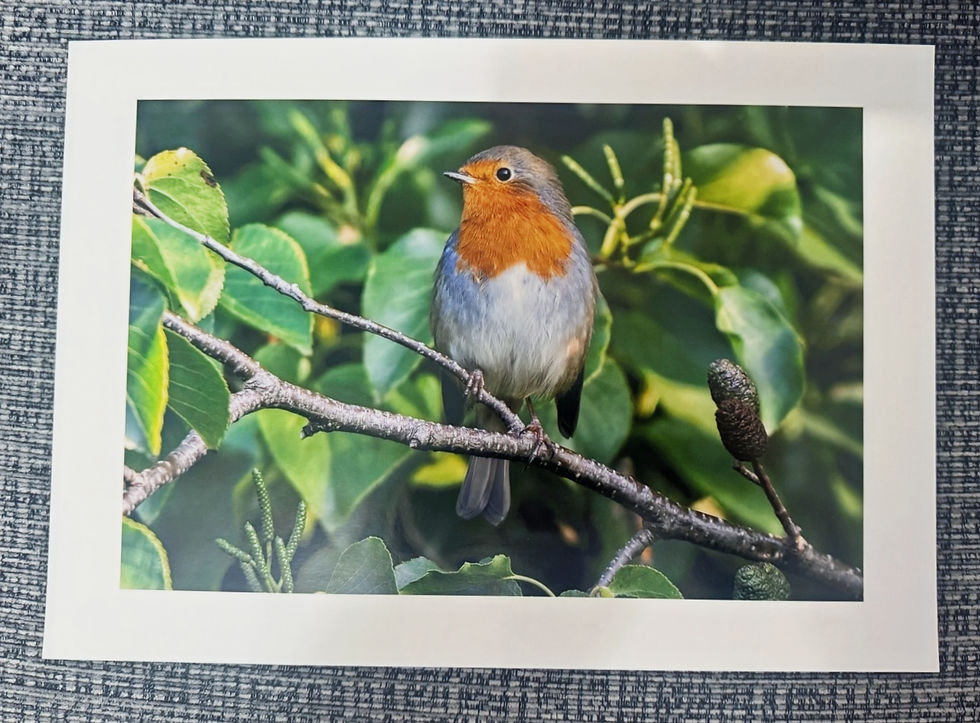
For all the talk of digital platforms, photography ultimately finds its final form in print. A screen is temporary. A print is an object.
Printing reveals the truth of a photograph. Weak compositions do not survive paper. Poor tonal balance becomes obvious. Strong images, however, gain depth, texture, and presence.
This is why paper choice, soft proofing, and controlled output matter. Printing is not an afterthought; it is the completion of the process.
AI and the Current Moment
Artificial intelligence is now part of the photographic landscape. Used carefully, it can assist workflow efficiency and technical refinement. Used carelessly, it can undermine authorship and intent.
Tools are neutral. Outcomes are not.
The responsibility remains with the photographer to decide what constitutes their work. Technology should serve vision, not replace it.
Experience as a Quiet Advantage
Experience does not guarantee better photographs. But it does provide context. It teaches when to wait, when to act, and when not to press the shutter at all.
After decades of shooting, what I value most is not speed or volume, but consistency and intent. Fewer images. Better decisions. Clearer outcomes.
Photography rewards attention over time. It always has.
Still Learning
Despite the years, the equipment, and the prints on the wall, I am still learning. Every subject behaves differently. Every light condition presents a new challenge. That is the appeal.
From film to pixels, the tools have changed dramatically. The craft has not.
And that, perhaps, is the most reassuring lesson of all.
If you are interested in the tools that have accompanied this progression, from film cameras to current digital systems, the Gear And Equipment portfolio provides an overview of the equipment I use today and the reasoning behind those choices. It reflects the same practical approach shaped by experience, where technology serves the work rather than defines it.
You can comment as a guest — no account required.


Comments