
AI, Authenticity, and the Question of Manipulation in Modern Photography
- Alan Young

- 3 days ago
- 6 min read

I am old enough to remember the transition from film to digital photography and the backlash that accompanied it. Digital images were dismissed as inferior, soulless, and fundamentally inauthentic. Photographers who adopted digital early were accused of taking shortcuts or abandoning craft.
Many of those arguments sound familiar.
Two decades later, digital photography has not diminished the medium. It has transformed it. It has revolutionised photography, filmmaking, and visual storytelling, and expanded access in ways that were previously unimaginable. Smartphones have placed cameras in billions of hands, while professional practice has continued to evolve alongside them.
Film did not disappear. It found its place.
Photography adapted not by rejecting change, but by absorbing it.
Seen in this context, AI does not represent an ending. It represents another inflection point. The discomfort surrounding it is less about technology itself and more about the disruption of established expectations.
The Myth of the Unmanipulated Image
The idea that a photograph can exist without pixel manipulation is, in practice, a fiction. From the moment a digital image is captured, it is processed. Demosaicing, noise reduction, sharpening, colour interpretation, and tonal mapping all occur before the photographer even opens an editing application.
Even basic corrective actions such as dust removal or healing involve altering pixel values. These processes are widely accepted, rarely questioned, and often invisible to the viewer.
Competition rules are sometimes described as banning “manipulation” outright, but in practice they permit a wide range of adjustments, provided authorship and content boundaries are respected. Much of the confusion arises not from the rules themselves, but from how they are simplified or interpreted in conversation.
AI Is Already Embedded in Photography
Much of the anxiety around AI assumes it is a new and separate intrusion. In reality, AI has been embedded in photographic software for years.
Noise reduction algorithms analyse patterns and predict structure. Content-aware tools evaluate surrounding pixels to reconstruct missing information. Sharpening and masking routines increasingly rely on subject recognition rather than simple contrast enhancement.
These processes are not manual, and they are not neutral. They involve interpretation by trained models. The distinction, then, is not whether AI is present, but how visible its influence is and how openly that influence is acknowledged.
Distinctions and Boundaries in Practice
There is genuine overlap in how AI is used in photography, and not all applications fit neatly into a single category.
In my own work, I explore AI in two distinct ways.
One is analytical and advisory. This includes using AI to analyse an existing photograph and provide guidance around tonal balance, composition, or potential edits. In this context, AI functions much like an advanced assistant. It offers suggestions, but the decisions, execution, and responsibility for the final image remain entirely mine.
The other is more interpretive and creative. Here, AI is used to help achieve a particular mood, atmosphere, or visual feel that goes beyond straightforward optimisation. This type of assistance moves away from documentary intent and into a different creative space.
For me, the distinction matters. Analytical guidance supports the photographic process. Interpretive assistance reshapes how the image is experienced. Both can be valid, but they are not the same, and they should not be treated as such.
Where AI moves beyond guidance and into interpretation, transparency becomes essential. Those images are approached and presented differently. They are not positioned as equivalents to minimally processed photographs, nor assessed within traditional documentary or competition frameworks.
Credibility, Creativity, and the Question of Trust
A question that often follows any discussion of AI is whether its use makes a photographer less credible, or even disingenuous.
I do not believe it does.
AI does not erase fieldcraft, patience, observation, or judgement. Those qualities exist long before any edit is made. What damages credibility is not the use of AI, but the misrepresentation of its role. When interpretive or AI-assisted images are presented as if they were straightforward documentary photographs, trust is undermined.
The issue, then, is not AI itself, but ambiguity.
Used openly, AI can place the photographer in a more overtly creative role.
Photography has never been limited to recording. Interpretation, mood, and emotional intent have always been part of the medium. AI simply changes how some of those decisions are expressed.
Credibility in wildlife photography is built on ethics, behaviour in the field, and transparency, not on the absence of modern tools. When distinctions are clear and intent is communicated honestly, credibility is not lost. It is reinforced.
A Hypothetical Boundary
Consider a hypothetical scenario.
An already strong photograph is subjected to AI-assisted interpretation in order to achieve a specific mood or aesthetic. At that point, the image clearly moves beyond documentary intent and into a different creative category.
The question is not whether such work has value. It is how it should be understood and assessed. Is it best viewed as photography in the traditional sense, or as creative or artistic interpretation built upon a photographic base?
This is where definitions begin to fracture, and where clarity becomes more important than argument.
Beyond Competitions: The Social Media Problem
This discussion does not stop at formal rules. It plays out daily on social media, often with far less nuance.
Images are frequently challenged when AI use is suspected but not declared. These reactions are rarely about artistic merit. They are driven by the belief that something has been hidden.
When an artist openly states that an image has been AI assisted or interpretively processed, the tone often changes. The image is no longer judged against documentary expectations. It is accepted on its own terms.
In many cases, transparency removes the conflict.
A Practical Example of Perception and Disclosure
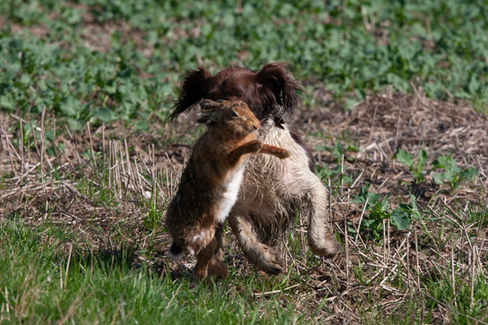
A recent social post asked a simple question: “AI or real?” The photograph was entirely real, yet several viewers instinctively assumed it was AI-generated. I found that reaction more revealing than the image itself. It suggested that the presence of AI in photography has shifted perception to the point where authenticity is now questioned by default. I later shared an AI-assisted interpretation of the same photograph, created deliberately and guided by a specific aesthetic intent.
The original image records a moment as it occurred. The interpreted version explores how mood, emphasis and narrative can be reshaped without altering authorship. For me, the difference between the two is not truth versus fiction, but documentation versus interpretation, and that distinction sits at the heart of how I am currently thinking about AI in photography.



Disclosure as the Line of Trust
I believe strongly in full disclosure. If an image has been significantly manipulated or created with the assistance of AI, that should be stated clearly. Not defensively, but plainly.
Would this stop some people liking the image? Possibly. But transparency builds trust, and trust matters more than universal approval.
Once declared, AI-assisted work can be appreciated for what it is. It no longer competes unfairly with minimally processed photography. Instead, it occupies its own space, where skill, intent, and restraint can still be recognised.
Tools do not replace authorship. They support it.
A Necessary Clarification
Some photographic organisations and competitions continue to exclude AI-assisted imagery, not out of resistance to progress, but because their purpose is to preserve a clearly defined photographic tradition. This position is entirely valid within a self-contained and transparently stated framework.
Nothing here is intended to reinterpret or challenge existing competition rules, which are necessarily precise by design, but to explore how emerging tools sit alongside established photographic practice outside those contexts.
Does AI Need a Home of Its Own?
An increasingly common question is whether AI-assisted imagery belongs within existing creative categories, or whether it ultimately requires a clearly defined space of its own.
The appeal of a dedicated category is obvious. It would offer clarity, remove suspicion, and allow photographers to present such work openly, without fear of misinterpretation or misplaced comparison.
At the same time, there is a practical question. Are current judging frameworks, and those applying them, ready to assess AI-assisted work in isolation? Judging such images requires an understanding of intent, degree of intervention, authorship, and restraint, not just technical execution.
It may be that the question is not where AI-assisted imagery should sit, but whether the structures around it are ready yet.
Conclusion
Photography has always evolved through moments of disruption. Each time, there is resistance, followed by adaptation, followed by acceptance.
AI represents another of these moments.
This is not an argument for changing rules or forcing acceptance. It is an argument for clarity, honesty, and proportion. For recognising that AI-assisted imagery exists, that it will continue to evolve, and that thoughtful engagement is more productive than denial or simplification.
Acceptance, in this context, does not mean endorsement. It means recognising an inevitability and choosing to engage with it carefully and openly.
If you would like to explore this further
Related post: Learning to See Differently: Micro Moments in the Field.
Wildlife portfolio: Recent Wildlife Photography created through fieldcraft, patience, and observation.
About: Background, approach, and photographic philosophy

Comments