Why the Nikon Z8 Loses Focus on Birds and How to Fix It

Introduction
If your Nikon Z8 initially locks onto a bird but then suddenly shifts focus, hesitates, or refuses to stay locked, you are not imagining it.
This behaviour is not random. It is how the autofocus system responds to interruption and competing information, particularly when the subject is small in the frame or partially obscured.
What’s Actually Happening
The autofocus system is constantly reassessing what should be in focus. When the bird overlaps with background detail or foreground elements pass through the frame, subject detection becomes less decisive. Tracking confidence drops, and the camera may shift focus to a nearer or higher contrast object instead of maintaining a consistent lock on the bird.
If the subject is small or distant, this becomes even more pronounced.
Start With This (Quick Fix You Can Try Today)
Before anything else, try this setup in the field:
AF Mode: AF-C
AF Area: Dynamic-Area AF
Subject Detection: Bird ON
Shutter: 1/1600–1/2500+
Drive Mode: Controlled bursts (not continuous shooting)
Then:
Keep the AF point on the bird at all times
If focus breaks, release and reacquire immediately
Avoid letting objects pass between you and the subject
This will immediately improve tracking stability.
Why Focus Jumps Occur
Autofocus tracking depends on continuous visual confirmation of the subject.
When that continuity breaks, the system has to decide what to prioritise next, and it may not return to the original subject immediately.
Even a brief obstruction can cause:
Focus hesitation
Subject switching
Tracking reset
This often happens when:
The bird passes behind branches
Another object crosses the frame
The subject changes direction quickly
The system is not failing. It is reacting to interruption.
What Actually Makes the Difference in Practice
Control the AF Area
Use Dynamic-Area AF for controlled tracking
Avoid Wide-Area AF in anything but clean scenes
A tighter AF area reduces the chance of the system switching targets.
Control Subject Placement
Keep the bird central within the AF area
Do not allow it to drift to the edges
Tracking is most stable when the subject is clearly prioritised.
Control Interruption
Anticipate objects crossing the frame
Adjust your position where possible
Avoid shooting through heavy foreground clutter
If focus is being pulled to reeds or branches,
see: When the Nikon Z8 Locks Onto the Background Instead of the Bird
Control Recovery
If focus breaks:
Do not try to force it back
Release, reacquire, continue
This resets the system faster than trying to correct mid-track.
Control Shooting Behaviour
Use short, controlled bursts
Avoid continuous shooting without reassessment
This gives you more opportunities to correct focus rather than committing to missed frames.
What Most People Get Wrong
They assume:
Once locked, focus should stay locked
The camera will always return to the subject
Faster shooting will fix inconsistency
None of these are reliable.
The issue is not speed. It is interruption and subject priority.
A Simple Way to Think About It
You are not maintaining focus.
You are maintaining priority.
If the camera loses clarity about what matters, it will choose something else.
Quick Summary (Field Reference)
Use Dynamic-Area AF for stability
Keep the subject central
Avoid foreground interference
Reset quickly if focus breaks
Use controlled bursts, not continuous shooting
Final Thought
This is not a limitation of the camera.
It is a limitation of uninterrupted tracking.
Once you reduce interference and manage recovery properly, focus becomes far more consistent.
Full Setup
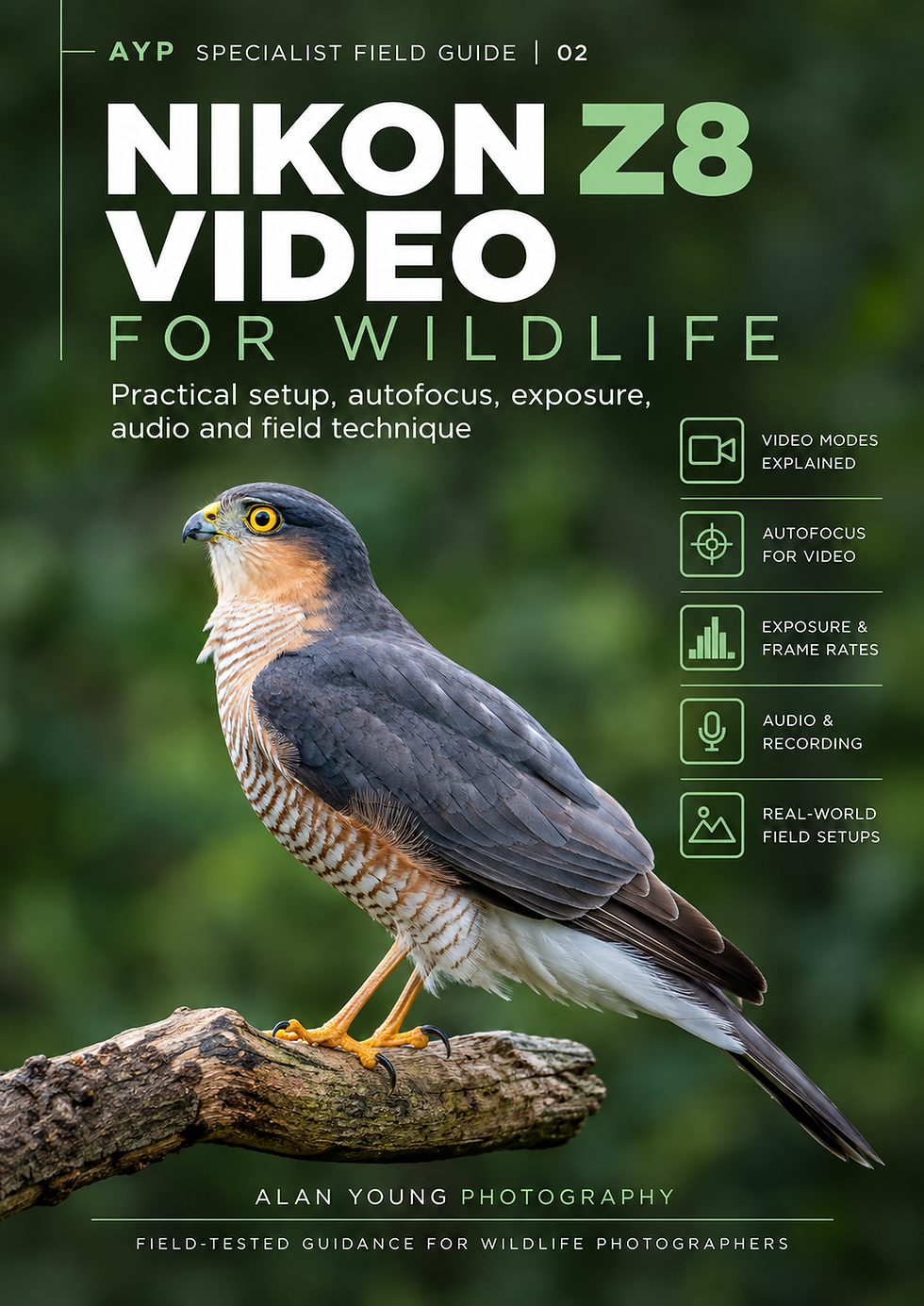
If you want the full field-based setup I use with the Nikon Z8 for bird photography, including autofocus configuration, shooting banks and real-world workflow:
Download the Z8 e-Guide



Comments