No. 06
Sparrowhawk
Accipiter nisus
Introduction
The Sparrowhawk, a small bird of prey found throughout Britain, is renowned for its remarkable agility and swift flight. Frequently observed darting through woodlands and urban gardens alike, it hunts smaller birds with precision. Its presence contributes significantly to local ecosystems, maintaining a balanced population of prey species and supporting biodiversity.
Identification
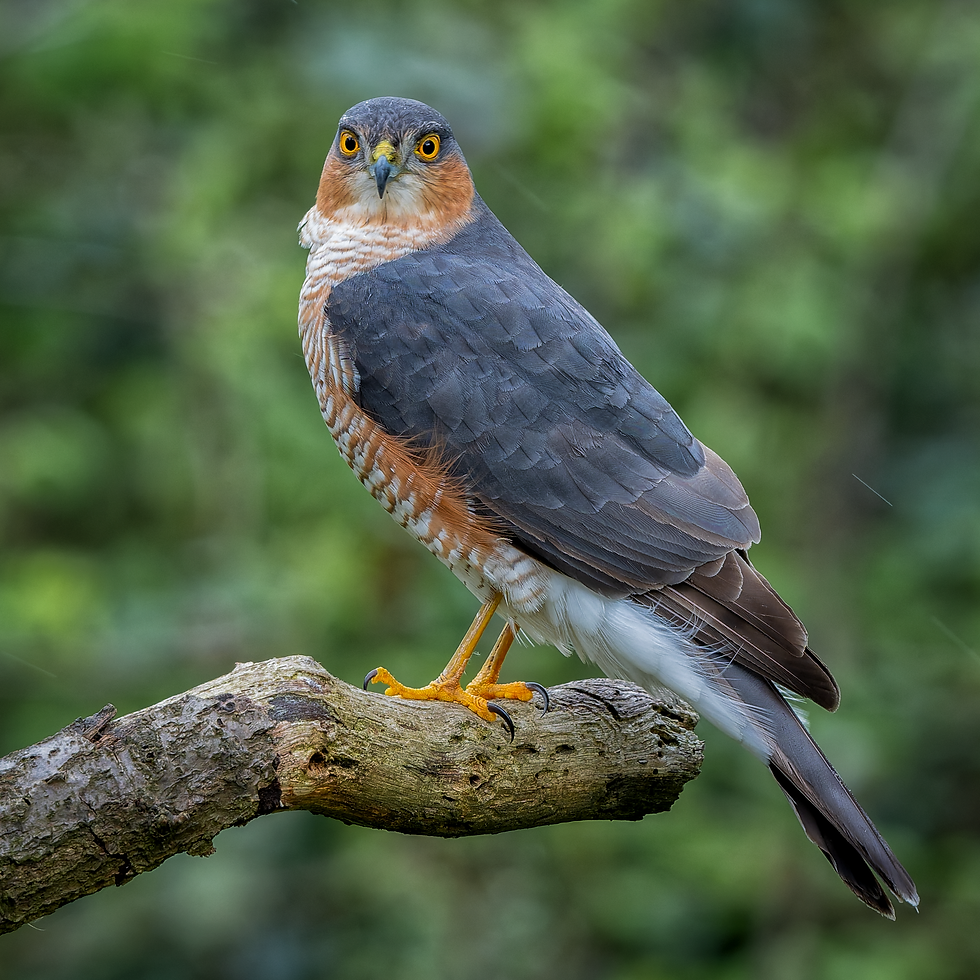
Sparrowhawks are compact birds of prey, characterised by their short, broad wings and long tails, which are perfectly adapted for agile flight through dense tree cover. Adult birds have slate-grey upperparts and orange-brown barred underparts, while juveniles appear browner. Their piercing yellow eyes and slender body shape help set them apart from other raptors.
Behaviour
Sparrowhawks primarily hunt by surprise, flying swiftly and low through dense cover to catch small birds unawares. They often perch patiently before launching a sudden ambush and tend to repeat familiar hunting routes within their established territory. During the breeding season, males diligently deliver food to females nesting deep within dense foliage.
Habitat
This species favours mixed woodlands, hedgerows, and increasingly urban gardens where prey is abundant throughout the year. They generally prefer areas offering ample cover for concealment alongside safe nesting sites, often situated near reliable water sources. Woodland edges and suburban parks consistently provide the ideal conditions necessary for them to thrive and reproduce successfully.
Diet
The diet of sparrowhawks consists almost entirely of small to medium-sized birds, such as songbirds and pigeons. They depend on stealth and the element of surprise to catch their prey, which they either swallow whole or tear apart. Occasionally, they will also prey on small mammals or insects if the chance arises.
Where to See
Sparrowhawks can be seen across Britain, particularly in wooded areas and garden habitats during dawn and dusk. They are recognised by their swift, sudden flights through tree branches or the distinctive silhouette of their flight. Places rich in small birds, like parks and nature reserves, provide excellent opportunities to observe them.
Photography Notes
Photographing Sparrowhawks demands considerable patience and respect for the birds. It is important to use a telephoto lens to maintain distance and avoid causing any disturbance. Concentrate on capturing natural behaviours, such as their swift hunting flights or calm perching. Early morning and late afternoon provide ideal lighting conditions. Always avoid nests during the breeding season to prevent stress.
Conservation Status
Sparrowhawk populations in Britain remain stable due to their adaptable habits and diverse habitats that support their survival. Although historical factors like changes in woodland structure and pesticide use negatively affected numbers, ongoing habitat protection and careful monitoring are vital to maintaining the long-term health and stability of these populations.
