No. 10
Long Tailed Tit
Aegithalos caudatus
Introduction
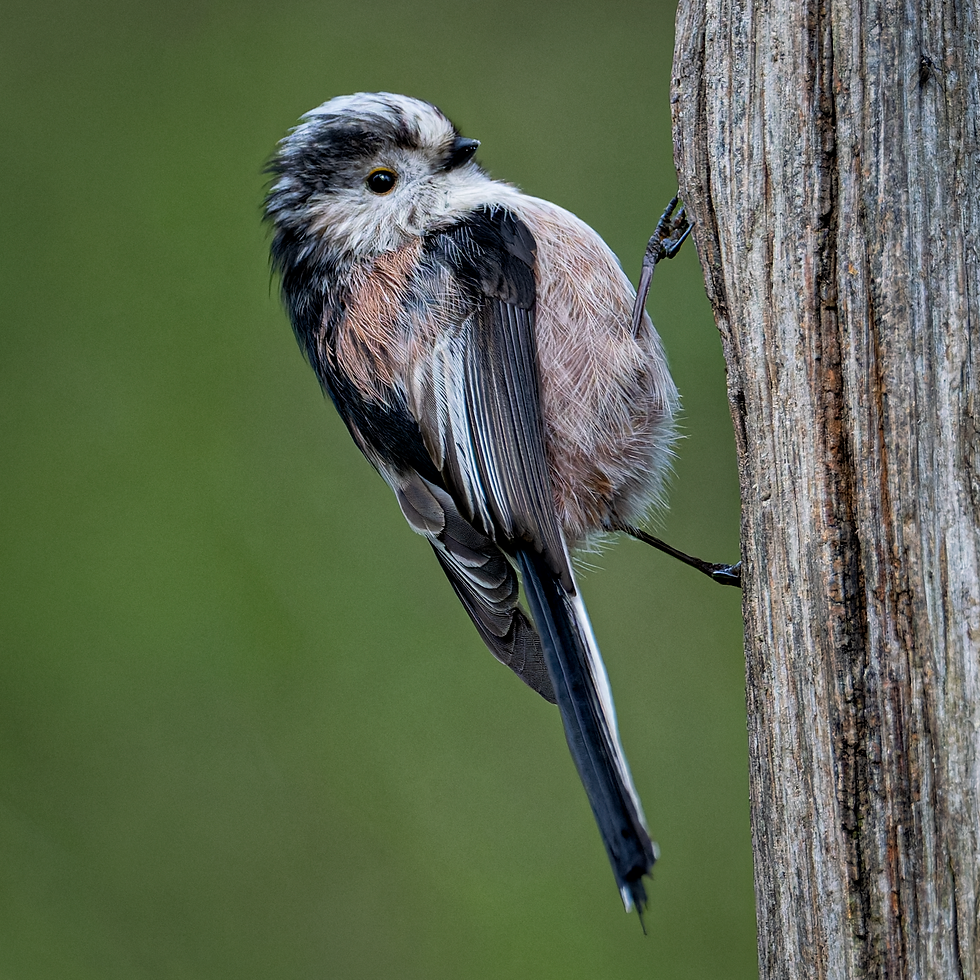
The Long Tailed Tit is a small, sociable bird, easily recognised by its distinctive tail which is about half the length of its body. Throughout Britain, it is commonly seen year-round in woodlands and gardens, often moving in lively flocks that brighten the winter months with their lively chatter and constant movement.
Identification
This bird features a round, fluffy body adorned with soft white and delicate pinkish hues, standing out due to its strikingly long black and white tail. Its small black eyes and subtle facial markings effectively distinguish it from other tits, particularly during winter months when it commonly forms visible flocks.
Behaviour
Long Tailed Tits are very social birds that frequently form flocks outside the breeding season. They communicate constantly using a range of light calls and are well known for their acrobatic feeding behaviours. Often, these birds hang upside down as they forage energetically among branches and leaves to find food.
Habitat
The species thrives across Britain in deciduous and mixed woodlands, as well as in hedgerows and parks. It also adapts well to gardens featuring dense shrubs which provide shelter and suitable nesting sites. These birds often favour locations characterised by mature trees and a plentiful undergrowth layer, offering excellent protection and resources.
Diet
Long-tailed Tits mainly feed on small insects, spiders and other tiny invertebrates, which they carefully glean from foliage, bark and slender twigs. During colder months, when insect prey becomes harder to find, they supplement their diet with seeds and soft fruits, helping them maintain the high energy levels needed to survive harsh winter conditions.
Where to See
They are widespread across Britain and can be readily found along woodland edges and within garden hedgerows throughout autumn to spring. You’ll often spot small, fluttering flocks of these birds moving energetically during the cooler hours of early morning or late afternoon, making them a delight to observe at these times.
Photography Notes
When photographing these birds, it is important to approach quietly so as not to disturb their flocks. Early morning light provides excellent conditions for shooting, though in shaded woodland areas longer exposures are necessary. Employing a telephoto lens allows you to capture their delicate features and dynamic movements without causing intrusion or disturbance.
Conservation Status
Long Tailed Tits are generally regarded as common and widespread across their range, yet ongoing habitat changes affecting woodland areas and hedgerows may pose a risk to certain local populations. Therefore, regular monitoring is recommended to ensure their conservation status is accurately understood in relation to the most recent available data.
