No. 08
Great Tit
Parus major
Introduction
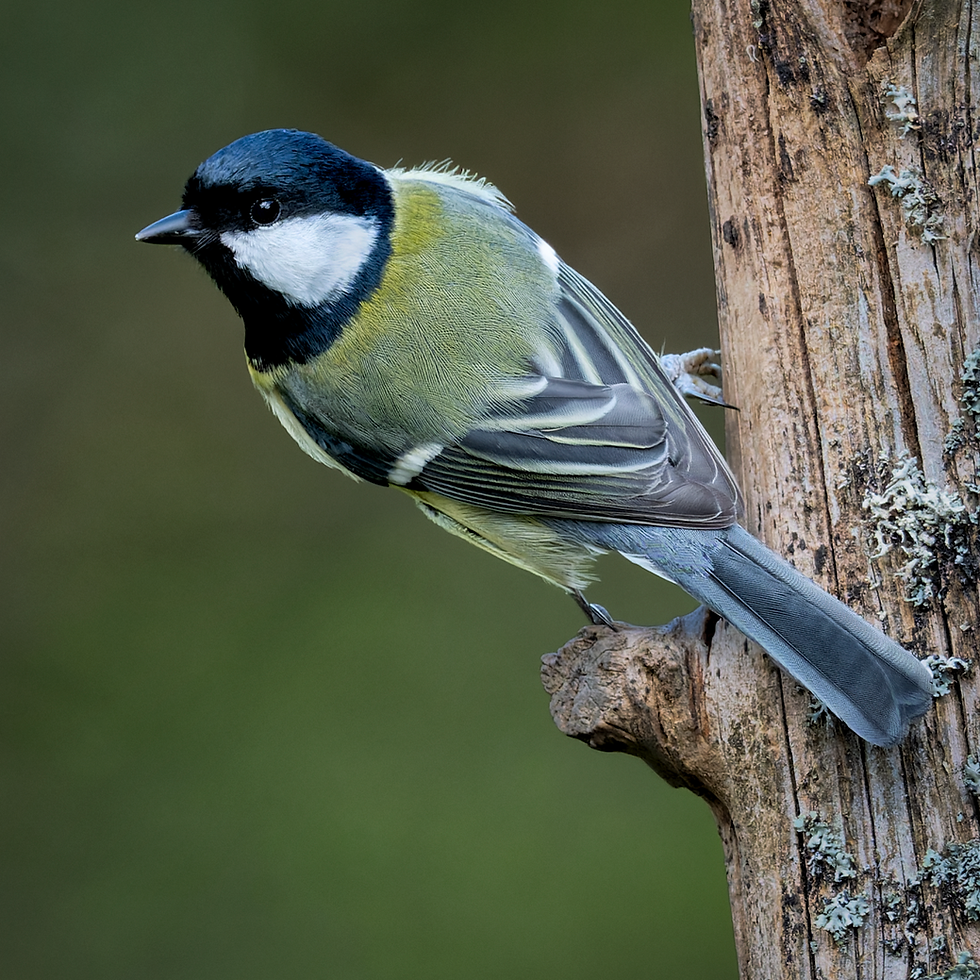
The Great Tit is a familiar and large member of the tit family widely distributed across Britain. Known for its bold black head and striking white cheeks, it is a common garden and woodland bird throughout the year, easily noticed by its distinctive two-syllable call and lively behaviour.
Identification
Great Tits possess a chunky body characterised by a distinctive black crown and throat stripe, complemented by white cheeks and bright olive-green upperparts. Their underparts are a vivid yellow, marked by a central black stripe that varies according to sex. The wings display clear white wing bars, while their robust bill enables them to consume a diverse, varied diet.
Behaviour
These birds are notably active and inquisitive, frequently observed hopping energetically among branches and garden feeders. They exhibit acrobatic feeding behaviours and distinct territorial calls, which become especially prominent during the breeding season. Great Tits may also engage in drumming on wood or metal surfaces to assert dominance and mark their territory.
Habitat
Great Tits primarily inhabit broadleaf and mixed woodlands, gardens, parks, and hedgerows across Britain. They adapt remarkably well to suburban environments that feature mature trees, often nesting in natural holes or provided nest boxes. This versatility allows them to thrive along diverse woodland edges as well as various urban green spaces.
Diet
The diet of this species is varied and changes according to the season; in spring and summer, they mainly consume insects and spiders, while outside the breeding season they shift their focus to seeds, nuts, and berries. Additionally, they are known to frequent garden feeders, where they enjoy peanuts and sunflower seeds, demonstrating adaptability in their food choices.
Where to See
Great Tits are widespread across Britain and can be readily seen in a variety of habitats including gardens, woodlands, and public parks, particularly where bird feeders attract them. The best times to observe these birds are at dawn and dusk when they tend to be most active. Their distinctive two-note call helps in locating them more easily during these periods.
Photography Notes
Photographing Great Tits requires quiet patience, especially when positioned near feeders or at the edges of woodland, allowing for close-range shots that reveal their vivid colours and sharp features. It is essential to use natural light to enhance these qualities. Always avoid disturbing nesting areas and keep the exposure brief to respect their natural behaviour.
Conservation Status
Great Tits are presently widespread throughout Britain, yet they encounter pressures from ongoing habitat loss and environmental changes. Although they are not considered at immediate risk, it remains essential to monitor their populations regularly to detect any potential declines early on. Consulting the latest conservation listings is recommended to ensure an accurate understanding of their current status.
