
No. 17
Goldfinch
Carduelis carduelis
Introduction
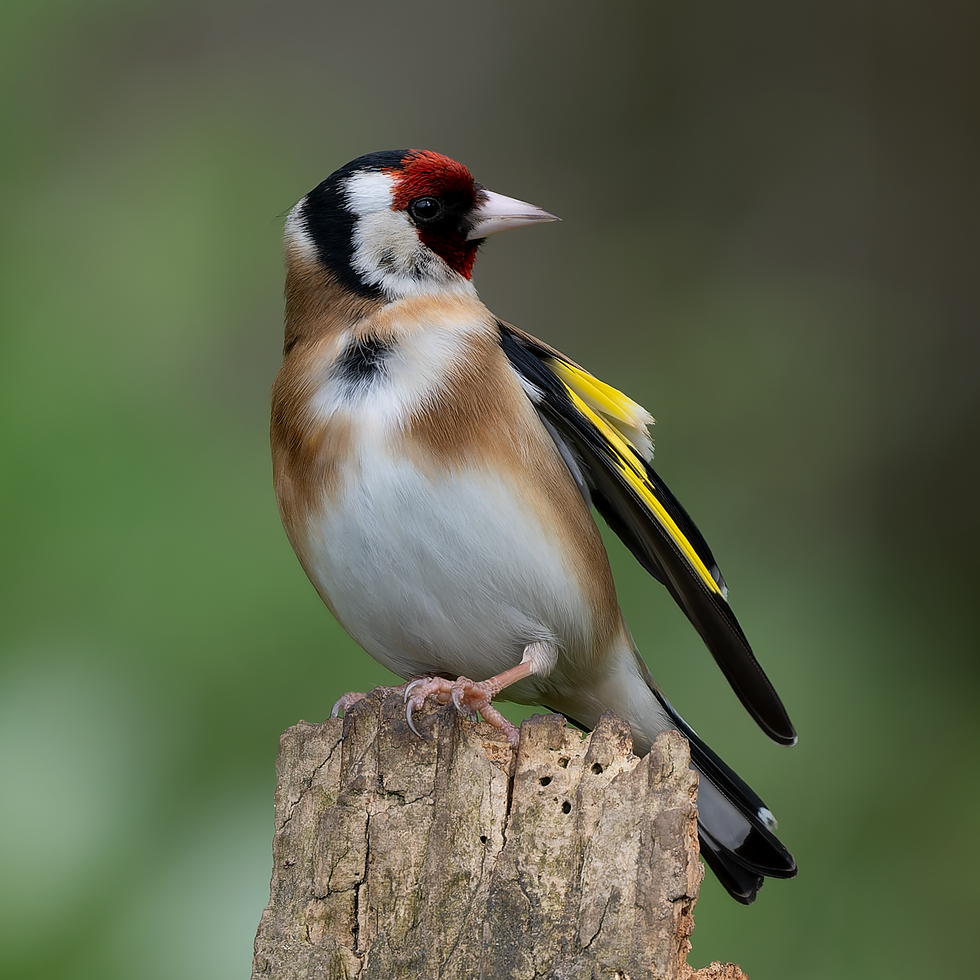
The goldfinch is a beautifully striking small songbird found widely across Britain, easily recognised by its vibrant red face and distinctive yellow wing patches. It is commonly spotted in gardens, parks, and rural countryside, where it is much admired for its melodious song and its lively, cheerful presence throughout much of the year.
Identification
This bird's distinctive features include a striking bright red face framed by black, a contrasting white head, and yellow wing bars that become visible during flight. Its body is mainly buff-brown adorned with black and white markings. Its small size, delicate bill, and fluttery flight pattern help set it apart from similar finches.
Behaviour
Goldfinches commonly feed in flocks, particularly outside the breeding season, displaying graceful, fluttering flights and frequent visits to seed heads. They are sociable birds, often gathering around feeders stocked with nyjer or thistle seed. Occasionally, they engage in lively song flights, adding a charming display to their communal feeding behaviour.
Habitat
This adaptable bird lives in a variety of habitats including mixed woodlands, hedgerows, the edges of farmland, and gardens throughout Britain. It particularly favours locations rich in seed-bearing plants such as teasels and thistles. These birds occur across a wide range of altitudes, from the lowlands to some upland regions, showcasing their versatility.
Diet
Their diet primarily comprises small seeds from various plants including thistles, teasels, and dandelions. When feeding their young, they may also take insects to provide additional nourishment. Their slender, pointed bill is especially well adapted for extracting seeds from seed heads and bird feeders, making it highly effective for their dietary needs.
Where to See
Goldfinches can be seen throughout the year in many parts of Britain, especially in southern England and the lowland areas of Scotland. They are frequently spotted at garden feeders, in parks abundant with wildflowers, or along farmland hedgerows, particularly during the spring to autumn months when their presence is more prominent.
Photography Notes
These birds are best photographed with a telephoto lens, whether at feeders or in natural settings featuring seed heads. Approach as quietly as possible to avoid causing disturbed behaviour. Early morning or late afternoon light is ideal, beautifully highlighting their vibrant colours. For stability, use a tripod and always observe them from a respectful distance.
Conservation Status
Goldfinch populations here in Britain are typically stable, though habitat loss alongside changes to farming practices can adversely affect local numbers. Conserving areas rich in seeds is vital to their ongoing support. It remains important to check the latest population assessments regularly, as their conservation status or official designations may alter over time.
