
No. 18
Buzzard
Buteo buteo
Introduction
The buzzard is a medium-large bird of prey commonly seen soaring across British skies. Recognised for its broad wings and distinctive flight style, it plays an important role in controlling rodent populations. These adaptable raptors are widespread throughout Britain and are often observed gliding gracefully over woodlands, farmland, and open country.
Identification
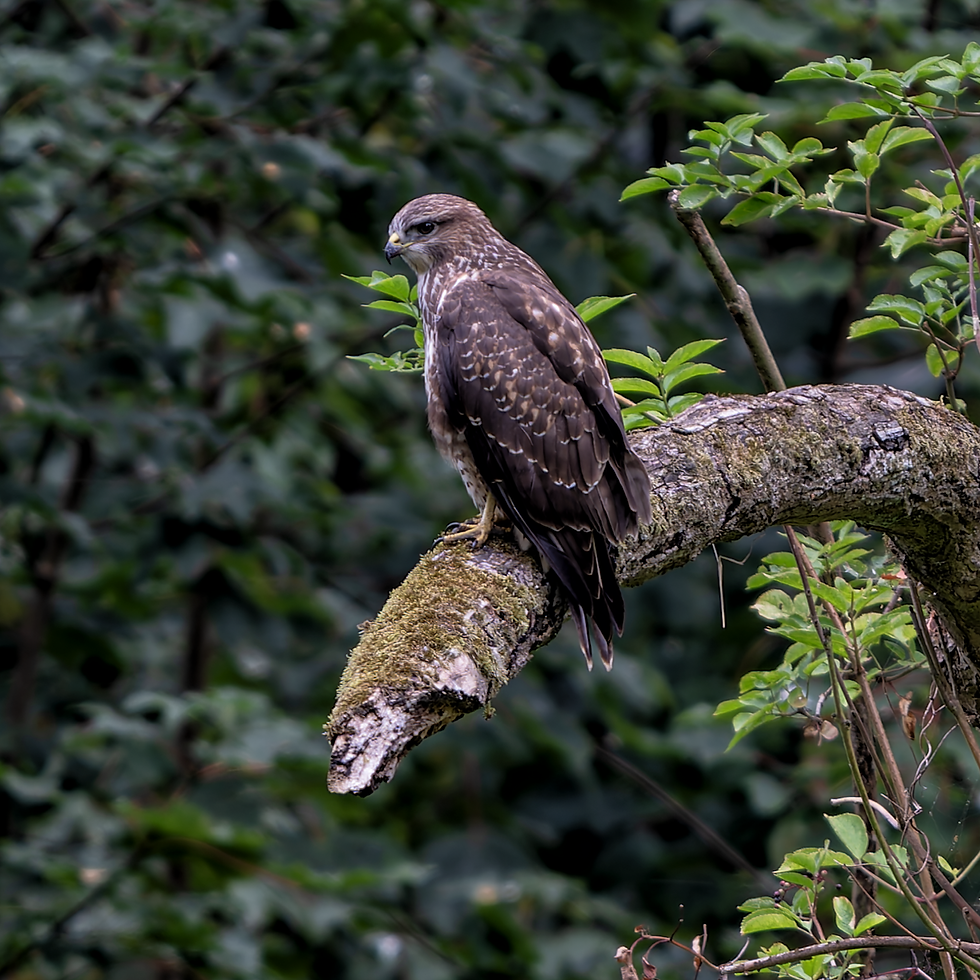
Buzzards have broad, rounded wings and a short, wide tail with a distinctive pale underside marked by variable dark patches. Their plumage varies from dark brown to lighter mottled tones. Adults display a contrasting pale chest and barred flight feathers. Their slow, buoyant wing beats are a key identification feature.
Behaviour
Buzzards are mainly diurnal hunters, frequently observed soaring in thermals or perched while carefully watching for prey. They are typically solitary or found in pairs outside the breeding season. With keen eyesight, buzzards spot small mammals and often descend slowly in a deliberate stoop to capture their prey on the ground.
Habitat
Buzzards favour mixed woodland edges, open countryside and moorland, showing remarkable adaptability across Britain’s varied landscapes. They usually build substantial nests high in mature trees, often near woodland, farmland or rough pasture. Nearby open ground is important for hunting, allowing them to search efficiently for small mammals, carrion and other prey while remaining close to secure nesting cover during breeding.
Diet
Buzzards primarily feed on small mammals such as voles and rabbits, but their diet is also supplemented with birds, reptiles, and carrion. They demonstrate opportunistic feeding habits, adapting to circumstances by either scavenging carcasses or actively hunting live prey depending on what is available in their environment at any given time.
Where to See
Buzzards are widely distributed throughout Britain and can regularly be seen in rural areas, nature reserves, and national parks such as the Lake District and Yorkshire Dales. You will often spot their soaring silhouette high above woodlands or open fields during daylight hours, gliding gracefully as they search for prey.
Photography Notes
Early morning or late afternoon light enhances the intricate plumage details of buzzards beautifully against the sky. Using a telephoto lens allows capturing them in flight or perched from a respectful distance, helping to avoid disturbance. It is also important to avoid nesting areas to prevent causing stress during these sensitive times.
Conservation Status
Buzzard populations in Britain have made a strong recovery, largely thanks to legal protections and the availability of suitable habitats. Despite this positive trend, it remains essential to monitor ongoing threats such as illegal persecution and habitat loss carefully. To maintain an accurate understanding, the species’ conservation status should always be confirmed using the most recent local data available.
