No. 09
Bullfinch
Pyrrhula pyrrhula
Introduction
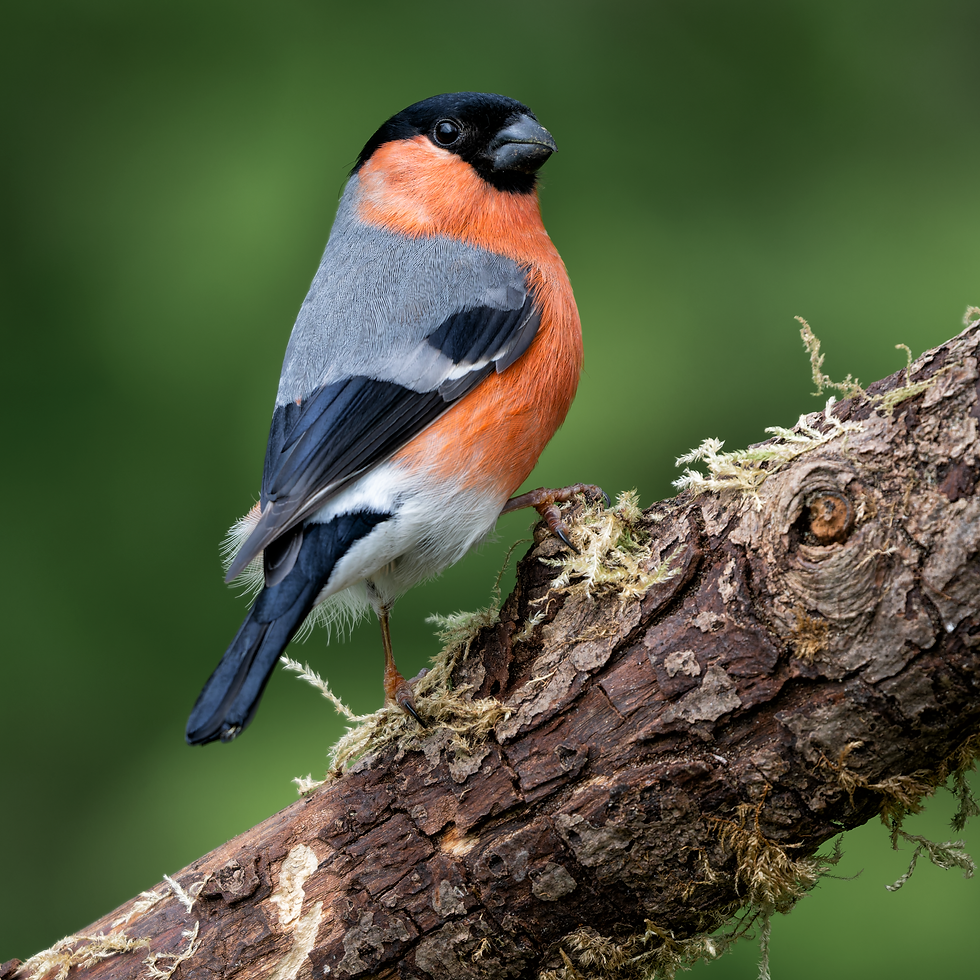
The Bullfinch is a stocky passerine bird, easily recognised by its vibrant colours and distinctive call. It inhabits much of Britain and is often seen in woodlands and gardens, particularly where dense shrubs offer ample cover. Its normally quiet nature frequently renders it less conspicuous, despite its bright and eye-catching plumage.
Identification
Bullfinches exhibit a chunky shape with a notably large head and a short neck. Males display a striking pinkish-red breast, contrasting with females which have duller, grey-buff underparts. Both sexes share a black cap and face, a white rump that is clearly visible when in flight, and a stout, black bill.
Behaviour
Bullfinches are typically shy birds that move quietly through dense foliage, usually feeding low down or at mid-level in trees. When disturbed, they often remain still rather than fleeing. Their call is soft and melancholic. Outside the breeding season, they are commonly observed in pairs or small groups, making their presence subtle yet distinctive.
Habitat
Bullfinches commonly inhabit various mixed woodland environments, alongside hedgerows and mature gardens throughout Britain. They particularly favour areas where dense undergrowth or thorny shrubs prevail, as these provide essential shelter and ideal nesting sites. Their presence is notably frequent in locations where native bushes such as hawthorn or blackthorn flourish naturally.
Diet
The Bullfinch's diet chiefly consists of seeds and buds from a range of trees and shrubs, with a particular preference for fruit tree buds in the springtime. Additionally, they consume insects, which provide essential protein especially during the breeding season. Their strong, specialised bill is perfectly adapted for stripping buds from branches with ease.
Where to See
In Britain, Bullfinches are best observed in well-vegetated woodlands and mature gardens, particularly during the quieter parts of the day when they are most active. Southern England and Wales tend to offer comparatively better chances of encountering these birds, but they are present in scattered populations throughout the entire country.
Photography Notes
To photograph Bullfinches effectively, approach them quietly whilst using natural cover to prevent disturbance. Dense shrubs offer excellent natural perches that encourage the display of authentic behaviours, which is ideal for capturing natural shots. Early morning light can beautifully enhance their vivid colours, but it is essential to avoid startling the birds during your approach.
Conservation Status
The populations of Bullfinches have declined in many areas owing to habitat loss and alterations in woodland management practices. Although they are not classified as critically endangered at present, the continuous pressures and threats to their preferred habitats make it necessary to maintain vigilant monitoring and to prioritise conservation efforts for their protection.
