
Nikon Z8 Bird Photography Settings (Field Guide)

Real-World Setup for Autofocus, Tracking and Reliable Results
Why the Nikon Z8 Excels for Bird Photography
The Nikon Z8 has quickly become one of the most capable tools available for wildlife photography.
Its stacked sensor, blackout-free shooting and advanced subject detection autofocus allow it to react instantly to fast, unpredictable movement. For bird photography, that matters.
Birds rarely give you time. They appear, move, change direction and disappear again in seconds. Capturing those moments consistently depends on both speed and control.
The Z8 delivers both, but only when configured properly.
A Practical Field-Based Setup
Modern cameras are no longer just imaging devices. They are computational systems.
Autofocus behaviour, subject detection, tracking response and control layout all interact. Small changes can significantly alter how the camera performs in the field.
This guide is based on real use rather than theory. It focuses on:
Autofocus behaviour in unpredictable situations
Tracking reliability across different environments
Control layout for fast, instinctive operation
The aim is simple:
A setup that reacts instantly, but still lets you guide the camera when it matters.
What Makes the Z8 Different in Practice
One of the most common challenges photographers face with the Z8 is not capability, but configuration.
There is no single “correct” setup.
Different environments demand different behaviour:
Open skies vs cluttered woodland
Large birds vs small passerines
Predictable flight vs erratic movement
This is why advice online often appears inconsistent.
In reality, most setups work well within specific conditions.
The key is understanding why the camera behaves the way it does.
Field Experience and Real Behaviour
This configuration has been shaped through repeated use in situations such as:
Small birds moving through dense vegetation
Birds in flight over water
Sudden take-offs from perches
Lower light woodland conditions
These scenarios expose how autofocus systems actually behave under pressure.
Some settings that look ideal on paper fail quickly in the field. Others become highly reliable once paired correctly.
Over time, a consistent pattern emerges:
Performance improves when you balance automation with control.
Best Nikon Z8 Settings for Bird Photography
There is no universal setup, but a strong starting point is:
Core Configuration
Autofocus Mode: AF-C
AF Area Mode: Dynamic Area AF (M)
Subject Detection: Bird Detection ON
Release Mode: Continuous High
Focus Method: Back Button Focus
This combination provides:
Fast acquisition
Stable tracking
Control over focus placement
From here, you refine based on subject and environment.
Autofocus Strategy for Birds in Flight
Birds in flight place maximum demand on autofocus systems.
The Z8 performs extremely well here, but only when the balance is right.
Key principle:
Let detection assist you, not replace you.
Dynamic Area AF gives control over where focus starts
Bird Detection helps maintain lock once acquired
Smaller areas reduce background interference
In complex scenes such as woodland or water reflections, this balance becomes critical.
Customising Controls for Speed
Wildlife photography is reactive. There is no time for menus.
Your setup should allow you to adjust instantly.
Typical customisations include:
Switching AF area modes
Activating tracking
Adjusting exposure quickly
Using back button focus
The goal is simple:
Operate the camera without breaking visual contact with the subject.
Lens Choice and Field Use
Lenses define both reach and behaviour.
Two highly effective options:
NIKKOR Z 180-600mm
NIKKOR Z 400mm f/4.5 VR S
In practice:
180–600mm offers flexibility across changing distances
400mm f/4.5 provides speed, sharpness and subject isolation
Both pair exceptionally well with the Z8 autofocus system.
Common Setup Mistakes
Most early issues come from configuration, not limitations.
Typical problems include:
Relying too heavily on full auto detection
Using AF areas that are too large for small birds
Leaving key functions buried in menus
Correcting these alone can transform performance.
Quick Start Summary
If you want a reliable baseline:
AF-C
Dynamic Area AF (M)
Bird Detection ON
Back Button Focus
Continuous High shooting
Use this as a foundation, then adapt based on conditions.
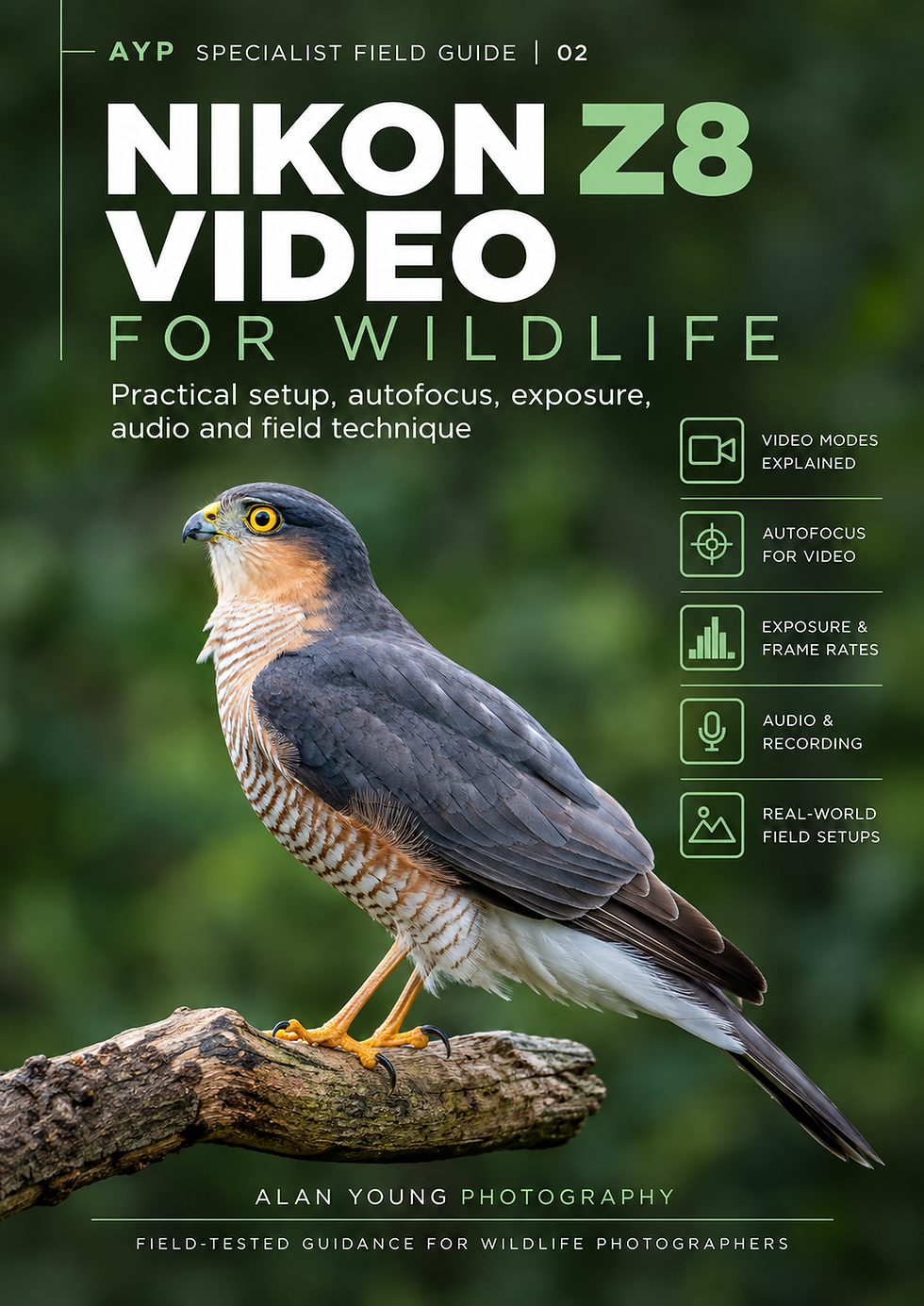
Download the Full Z8 Setup Guide
This article explains the thinking behind the setup.
The full configuration is available in the complete guide:
Designed for use in the field, the guide provides a structured reference you can follow while configuring your camera.
Why This Guide Is Free
This guide is built on shared knowledge.
Much of what we learn as photographers comes from others testing, refining and sharing their experience.
This simply brings that process together into one place.
If it helps you spend less time in menus and more time observing behaviour, it has done its job.
Final Thoughts
The Nikon Z8 is an exceptionally capable wildlife camera.
Its performance is not just defined by technology, but by how it is configured and used.
Once set up properly, it becomes intuitive, responsive and highly reliable in real conditions.
And at that point, the camera disappears.
Which is exactly where it should be.


Comments